



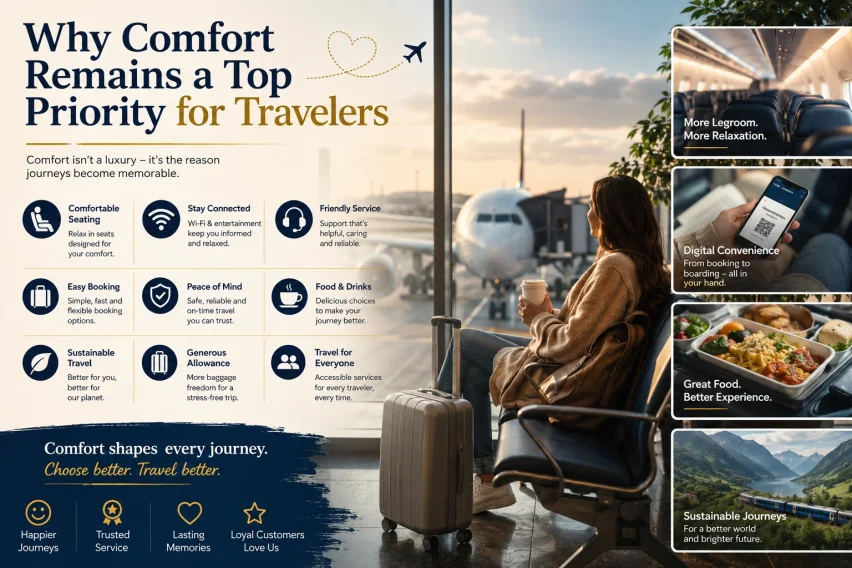
Travelling has never been more accessible. Whether it's a short city break, a business meeting abroad, or a long-awaited family holiday, millions of people across the UK and Europe travel every day by air, rail, and road. Yet despite advances in technology and increasing transport options, one thing has remained constant: comfort continues to be one of the biggest factors influencing travel decisions.
Today's travellers don't simply compare prices before booking. They also consider how comfortable the journey will be from beginning to end. Comfortable seating, generous legroom, easy booking, reliable customer service, onboard entertainment, and a stress-free travel experience all play an important role in deciding which airline, train operator, or travel provider to choose.
Consumer expectations have also evolved. According to the International Air Transport Association (IATA), passengers increasingly expect seamless digital services, better communication, and greater convenience throughout their journey. At the same time, travellers are becoming more selective, choosing companies that prioritise the overall travel comfort experience rather than focusing solely on low prices.
Comfort is no longer viewed as a luxury. Instead, it has become an essential part of modern travel that affects satisfaction, loyalty, and even whether customers recommend a travel brand to others.
This guide explores why comfort remains a top priority for travelers, the factors that contribute to a comfortable travel experience, and how leading UK and European travel brands continue raising standards to meet growing passenger expectations.
Modern travel can involve long security queues, delayed departures, crowded terminals, and hours spent sitting in one position. When these unavoidable challenges are combined with uncomfortable seating or poor customer service, even a short journey can become exhausting.
That's why travellers increasingly look beyond the ticket price. Instead, they ask questions like:
These questions reflect a broader shift in consumer behaviour. Travellers today understand that paying slightly more for a significantly better experience often represents better overall value.
Research from the European Commission also shows that passenger rights and service quality have become increasingly important across European transport, encouraging companies to improve comfort, accessibility, and customer satisfaction.
As competition grows throughout Europe, companies are investing more heavily in improving every stage of the travel experience, recognising that comfort plays a major role in customer loyalty.
"Comfort" means different things to different travellers. For some, it's having extra legroom during a long flight. For others, it's knowing their luggage will arrive safely or receiving helpful assistance when plans change unexpectedly. However, several factors consistently shape a positive traveler comfort experience.
One of the first things passengers notice is the seat itself. Whether travelling for one hour or twelve, seating has a major influence on how enjoyable the journey feels.
Modern travelers appreciate the following:
These features reduce fatigue and make longer journeys far more comfortable. Premium cabins naturally offer additional comfort, but many standard cabins across Europe have also improved significantly in recent years.
Personal space has become increasingly important, particularly on longer journeys. Crowded cabins, limited storage, and restricted legroom can quickly affect the overall passenger comfort experience.
Many transport providers now offer the following:
These improvements allow travellers to relax rather than simply endure the journey. For taller passengers especially, additional space can dramatically improve comfort.
Noise can significantly influence travel comfort. Modern aircraft and trains are becoming noticeably quieter thanks to advances in engineering and insulation. A quieter cabin allows passengers to:
Lighting also plays an important role. Many newer aircraft now use adjustable LED lighting that helps create a calmer atmosphere throughout different stages of the journey.
Temperature is often overlooked until it becomes uncomfortable. Cabins that are too hot or too cold quickly affect passenger satisfaction. Today's vehicles increasingly use intelligent climate systems that automatically regulate temperature and improve air circulation. Good ventilation also contributes to a fresher, more pleasant environment throughout the journey.
Comfort begins long before departure. A simple online booking process immediately creates a positive impression. Travellers increasingly expect the following:
Removing unnecessary complexity helps reduce stress before the journey even begins. Digital convenience has become one of the strongest contributors to overall travel comfort.
Technology improves travel, but excellent people make memorable journeys. Professional customer service remains one of the strongest influences on customer satisfaction.
Passengers value staff who:
A helpful interaction during a disruption is often remembered long after the journey itself. Many travellers remain loyal to brands that consistently provide excellent customer care.
Connectivity has become an important part of modern travel. Business travellers often need internet access to continue working. Families appreciate entertainment that keeps children occupied. Leisure travellers enjoy watching films or listening to music during longer journeys.
Modern in-flight comfort increasingly includes:
These features make time pass more quickly while improving the overall journey.
Comfort also means ensuring everyone can travel confidently. Across Europe, transport providers continue improving accessibility for passengers with reduced mobility, older travellers, and families travelling with young children.
Many services now include:
Making travel easier for everyone creates a more inclusive customer experience.
When comparing similar prices, travellers often choose the company offering the better experience. Comfort reduces uncertainty. Passengers feel more confident booking with a provider known for reliable service, comfortable seating, and excellent customer care. This confidence influences every stage of the customer journey.
A comfortable experience often leads to:
Businesses understand this. That's why comfort has become one of the strongest competitive advantages across Europe's travel industry.
Travelling can be physically demanding. Long periods of sitting, changing time zones, carrying luggage, and navigating unfamiliar places all place stress on the body. A comfortable journey helps reduce that stress.
Better seating supports posture. Good cabin lighting reduces eye strain. Lower noise levels make relaxation easier. Reliable schedules reduce anxiety. Helpful staff remove unnecessary frustration. These small improvements combine to create a much healthier travel experience. For frequent travellers, these benefits become even more important over time.
Across the UK and Europe, travel companies understand that passengers are no longer looking for transport alone. They want journeys that are comfortable, reliable, and enjoyable from start to finish. As competition continues to grow, many leading airlines and rail operators have invested heavily in improving every stage of the customer experience.
British Airways continues investing in passenger comfort through upgraded cabins, redesigned seating, enhanced onboard dining, and improved digital services. Many long-haul aircraft now feature modern cabin interiors, larger entertainment screens, quieter cabins, and high-speed Wi-Fi, helping travellers stay productive or entertained throughout their journey. The airline has also expanded its mobile services, allowing passengers to manage bookings, receive live travel updates, and access digital boarding passes with ease.
Lufthansa has focused heavily on improving both passenger comfort and operational efficiency. Its newer aircraft offer quieter cabins, ergonomic seating, advanced air filtration systems, and energy-efficient lighting that helps reduce travel fatigue. The airline has also introduced upgraded business and premium economy cabins designed to provide additional personal space for longer journeys.
Air France combines modern technology with French hospitality to create a comfortable onboard experience. Comfortable seating, carefully designed cabin interiors, improved meal services, and personalised customer care all contribute to high passenger satisfaction. Its investment in digital check-in, real-time travel notifications, and simplified booking systems has also made travelling much more convenient.
KLM continues modernising its fleet while maintaining a strong focus on customer comfort. Travellers benefit from comfortable seating, improved entertainment systems, onboard Wi-Fi, and user-friendly digital services. The airline also provides excellent customer communication during delays or schedule changes, reducing uncertainty and helping passengers travel with greater confidence.
Virgin Atlantic has built a reputation for offering a premium customer experience across multiple cabin classes. Comfortable seating, mood lighting, high-quality entertainment, onboard connectivity, and attentive cabin crews all contribute to a relaxing journey. The airline regularly updates its fleet with newer aircraft that offer quieter cabins and improved fuel efficiency while enhancing passenger comfort.
For travellers moving between major European cities, Eurostar offers an alternative that combines speed with comfort. Spacious seating, generous luggage allowances, onboard Wi-Fi, and city-centre departures eliminate many of the stresses associated with air travel. Its smooth high-speed rail service allows passengers to work, relax, or enjoy the scenery throughout the journey.
Finnair places a strong emphasis on Scandinavian simplicity and passenger wellbeing. Many of its newer aircraft feature ergonomic seating, improved cabin lighting designed to reduce jet lag, and quiet interiors that create a more peaceful travel environment. Its straightforward digital services also make booking and managing travel remarkably easy.
SAS continues investing in passenger comfort through modern cabins, improved seating, digital self-service options, and reliable onboard connectivity. The airline has also introduced more sustainable fleet upgrades while maintaining high standards of passenger comfort across both domestic and international routes.
Jet2 consistently receives high customer satisfaction ratings thanks to its friendly service, transparent pricing, and reliable holiday travel experience.
Passengers appreciate its efficient boarding process, professional cabin crew, and simple booking system, proving that comfort is influenced just as much by good service as by physical amenities.
easyJet has steadily improved the overall passenger experience by introducing digital innovations, mobile boarding passes, flexible booking options, and improved customer communication. Although positioned as a low-cost airline, the company continues investing in operational efficiency and customer convenience, making travel more comfortable without significantly increasing ticket prices.
Technology has transformed almost every stage of modern travel. What once involved printed tickets, long queues, and uncertain travel updates can now be managed through a smartphone in just a few minutes. Today's travellers expect convenience before they even begin their journey. Mobile booking platforms, digital boarding passes, contactless check-in, and live travel notifications have become standard features across many UK and European transport providers.
Artificial intelligence is also improving customer service by answering routine enquiries, helping passengers manage bookings, and providing instant travel updates. Many companies now use predictive technology to notify travellers about delays before they arrive at the station or airport, allowing them to adjust their plans more easily. Smart luggage tracking, biometric security checks, automated baggage systems, and digital wayfinding are also reducing stress throughout the travel experience. Rather than replacing human service, technology is making journeys smoother, faster, and considerably more convenient.
Modern travellers increasingly want journeys that are not only comfortable but also environmentally responsible. Across Europe, airlines and transport providers are investing in newer aircraft, electric trains, sustainable aviation fuels, and more efficient operations that reduce emissions while improving passenger comfort.
Newer vehicles often provide:
Many travellers now actively choose companies that combine sustainability with excellent customer experience. This shift demonstrates that comfort today extends beyond physical seating. Many passengers also value knowing their journey has a lower environmental impact. As sustainable transport technologies continue developing, comfort and environmental responsibility are becoming closely connected.
Choosing the right travel provider involves much more than comparing ticket prices. Before booking, consider the following factors:
A small difference in ticket price can often result in a significantly better travel experience.
Passenger expectations continue evolving, and travel companies are investing heavily in innovations designed to improve comfort over the coming years. Some of the biggest trends include:
These innovations will continue making travel more comfortable while improving efficiency and sustainability across the European transport industry.
Comfort reduces stress, improves passenger wellbeing, and makes journeys more enjoyable. Comfortable seating, reliable service, and convenient digital tools all contribute to a better travel experience.
Key factors include comfortable seating, sufficient legroom, friendly customer service, onboard entertainment, reliable Wi-Fi, simple booking systems, good climate control, and efficient customer support.
Technology has simplified booking, introduced digital check-in, improved customer communication, enhanced entertainment, and made travel updates available in real time.
Comfort remains one of the most important factors influencing modern travel decisions. While affordable fares and convenient schedules continue to matter, travellers increasingly value experiences that minimise stress and maximise convenience from booking through to arrival. Across the UK and Europe, leading airlines and rail operators are investing in better seating, smarter technology, improved customer service, and more sustainable transport solutions that enhance every stage of the journey. These improvements are helping redefine what passengers expect from modern travel.
As technology continues to evolve and customer expectations grow, comfort will become an even stronger competitive advantage. Travellers who take the time to compare service quality, onboard amenities, digital features, and passenger reviews, not just ticket prices, are far more likely to enjoy journeys that are comfortable, efficient, and memorable.