


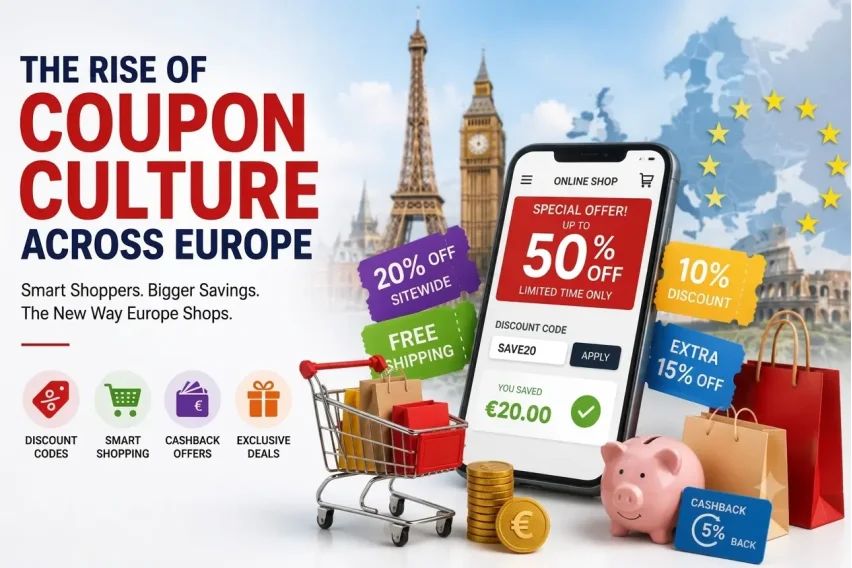
Back a few years ago, clipping coupons felt like something your grandmother did with a pair of scissors and a Sunday newspaper. Today, the same instinct, to get more value for less money, has been reborn in a completely digital form. From flash-sale notifications on a phone to browser extensions that automatically find a discount code at checkout, coupon culture in Europe has exploded into one of the defining shopping behaviours of the decade. This is not a passing trend tied to one economic downturn. It is a structural shift in how European shoppers think about value, and it is reshaping retail across the continent.
This guide explores why coupon culture is rising in Europe, what is driving it, and what it means for both shoppers and brands.
Coupon Culture is a phenomenon in which individuals are more inclined to look for discount codes, promo codes, online coupons, and cashback when considering a purchase. It is more than occasionally using a discount; it is a mindset where searching for deals and discounts becomes a normal, expected part of the shopping experience.
This behaviour shows up in several familiar forms:
What used to be a niche habit for budget-conscious shoppers is now mainstream behaviour across nearly every demographic in Europe.
Several forces are working together to push coupon culture in Europe from a side habit into a default shopping behaviour.
Many countries in Europe are seeing inflation and increased costs of living, so consumers are no longer shopping because they want to; they are shopping because it is a necessity. European shoppers are simply more motivated to find a discount code before they buy, because every euro or pound saved matters more than it used to.
Unlike old-fashioned paper coupons, digital coupons require almost no effort. A shopper does not need to plan ahead, cut anything out, or remember to bring something to the store. A quick search for "promo code" before checkout takes seconds, which removes nearly every barrier that used to limit coupon use.
Tools that automatically scan for and apply voucher codes at checkout have made smart shopping effortless. These extensions search dozens of sources in the background, meaning shoppers do not even need to actively look for deals; the savings simply appear.
Influencers and content creators regularly share discount codes with their followers, turning coupon hunting into a social and even entertaining activity. A code shared in a video or post can drive thousands of purchases within hours, accelerating coupon culture far beyond traditional advertising.
Retailers themselves have leaned into this behaviour, regularly offering deals and discounts as a core part of their marketing rather than an occasional promotion. Email coupons, app-exclusive promo codes, and seasonal flash sales are now standard practice across online retail in Europe.
As online shopping has become more familiar and trusted, European consumers feel more comfortable entering payment details and applying discount codes without hesitation. Greater confidence in eCommerce platforms has removed friction that once limited coupon use.
Coupon culture offers real, tangible advantages to everyday shoppers across Europe.
The growth of coupon culture in Europe is not just about saving money; it is changing how people shop in deeper ways.
A number of platforms have become central to how European shoppers discover and use discount codes, helping turn casual savers into habitual deal-seekers.
As one of the most visited online coupon platforms in the UK, VoucherCodes partners directly with major retailers to offer verified promo codes and discounts, making it a trusted first stop for price-conscious shoppers. They guarantee that every code listed on their site is tested and verified to work; if an active code fails at checkout, the company's policy is to compensate the user with a £20 gift card.
Pepper operates one of Europe's largest deal-sharing communities, where shoppers discover and share verified discounts, voucher codes, cashback offers, and limited-time promotions from thousands of retailers across Europe.
Pouch is a UK-based browser extension that automatically searches for and applies valid discount codes at checkout. By helping shoppers save money without manually searching for voucher codes, it has become a popular tool for online shopping across the UK.
Combining cashback with traditional online coupons, TopCashback has built strong brand loyalty among UK shoppers by rewarding them twice; once through a discount and again through cashback on the same purchase. It offers merchant-specific vouchers and sign-up bonuses (usually £10 to £30) instead of a site-wide code. To ensure cashback tracks successfully, users must only use codes found directly under the retailer's "Vouchers" tab on TopCashback; external discounts will invalidate the rewards.
While best known for its flexible payment options, Klarna also surfaces discount codes and retailer deals directly within its shopping app, blending loyalty programs with everyday smart shopping habits. Rather than offering universal, site-wide codes, Klarna provides targeted savings through an automated browser extension that tests codes at checkout, exclusive in-app partner discounts, and localized sign-up rewards (such as a £10 to £15 welcome bonus for UK users).
These platforms have built large, loyal audiences by curating promo codes across fashion, travel, and electronics, reinforcing just how mainstream coupon culture in Europe has become. Both sites deal with terms, limits, and exclusions set entirely by individual merchants, and earn commissions via affiliate tracking, meaning external, unauthorized codes will void your cashback or reward eligibility. Code stacking is generally prohibited, and retailers can withdraw discounts at any time without notice.
The widespread success of these platforms shows that coupon culture is no longer a workaround for bargain hunters; it is now a fully integrated part of the online shopping journey for millions of Europeans.
For retailers, coupon culture is not a threat; it is an opportunity when approached strategically.
The rise of coupon culture across Europe reflects a broader shift toward smarter, more intentional spending. What began as a simple way to save money has grown into an expected, normal part of the online shopping experience, supported by digital coupons, cashback apps, and powerful loyalty programs. For shoppers, this means more accessible savings and greater control over spending. For brands, it means coupon culture is now a core part of retail strategy, not a side promotion.
As economic pressures continue and digital tools become even easier to use, coupon culture in Europe is set to keep growing. Retailers that embrace discount codes, promo codes, and deals and discounts as a genuine part of their customer relationship, rather than a last resort, will be best positioned to earn long-term brand loyalty in this new era of smart shopping.