



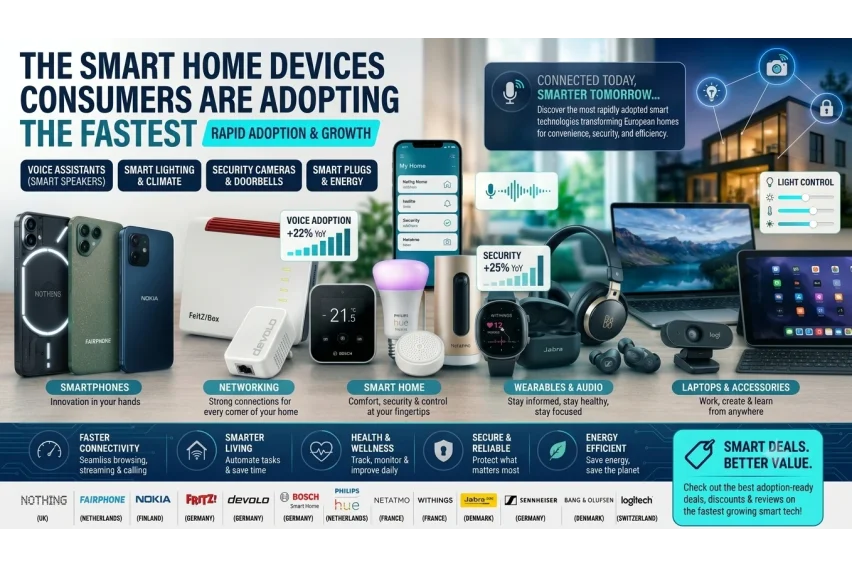
The way people live has changed a lot because of technology. You can see this change clearly in people's homes. Things that used to seem like they were from the future are now a part of life. People who own homes in the UK and Europe are buying connected technology to make their daily lives easier. This technology helps them use energy and makes their homes safer.
Nowadays, smart home products can do a lot more than just turn lights on and off from another room. They help families keep an eye on their homes, use energy, and do tasks automatically. They also help families stay in touch with each other whether they are at home or in another country.
As innovation continues to accelerate, the demand for smart home devices consumers are adopting the fastest continues to grow. Consumers are no longer purchasing individual gadgets simply because they are new. Instead, they are building connected ecosystems where multiple devices work together to deliver greater convenience and long-term value.
Whether you're planning your first smart home upgrade or expanding an existing setup, understanding the latest technology can help you make informed purchasing decisions. Throughout this guide, we'll explore the devices gaining popularity across the UK and Europe while highlighting trusted regional brands that consistently deliver quality, innovation, and reliability.
The idea of smart home technology is getting really popular these days. Over the past few years, a lot of people have started to use it. There are reasons for this. For example, energy costs are going up; people are more worried about home security. They want things to be easier.
Many homeowners want to be able to control things even when they're not there. It is nice to be able to turn the heat down when you're not home or to see what is going on at your house with a security camera on your phone. You can even get a message when someone comes to your door. This makes people feel safer. It is also very useful.
Nowadays it is easier to set up devices, and they do not cost as much as they used to. This has encouraged many households to gradually build their own smart home systems rather than investing in everything at once.
Another important reason behind this growth is sustainability. Many energy-saving smart devices help reduce electricity and heating costs by automatically adjusting their performance based on household routines. This makes smart technology an attractive investment for homeowners looking to improve both comfort and efficiency.
Among all the smart home devices available today, intelligent lighting remains one of the most widely adopted.
Unlike traditional lighting systems, smart lighting allows homeowners to control brightness, colours, schedules, and energy usage directly from a mobile app or wireless controller. Many systems also allow different lighting scenes to be created for work, relaxation, entertainment, or bedtime.
One of Europe's most recognised brands in this category is Philips Hue (Netherlands). Its extensive range of smart bulbs, light strips, outdoor lighting, and accessories has become a popular choice for households looking to improve convenience while reducing unnecessary energy consumption.
Another excellent option is Lightwave (UK), which offers smart lighting controls designed specifically for modern British homes. Its products integrate lighting with power management, helping homeowners create more efficient living spaces without replacing every existing fitting.
Consumers comparing lighting systems should consider compatibility, ease of installation, software updates, and long-term support rather than focusing solely on price. Reading expert reviews and checking available promotions can often help identify the best value.
Heating accounts for a significant portion of household energy use, making it one of the first areas many homeowners choose to automate.
Modern home automation devices allow users to control heating schedules remotely, adjust room temperatures individually, and monitor energy consumption through intuitive mobile applications.
Tado° (Germany) has become one of Europe's leading smart heating brands. Its intelligent thermostats automatically adjust heating based on occupancy, weather conditions, and daily routines, helping households improve comfort while reducing unnecessary energy use.
Another trusted UK brand is Hive, whose smart heating controls allow homeowners to manage heating and hot water from almost anywhere. Hive's simple interface and reliable performance have made it a popular choice among families looking to lower their energy bills without sacrificing convenience.
When choosing smart heating products, buyers should compare compatibility with existing boilers, ease of installation, software support, and available warranty options. A well-designed heating system not only improves comfort but can also deliver noticeable savings over time.
Among the smart home devices consumers are adopting the fastest, security products have seen some of the strongest growth. Homeowners want the reassurance of knowing they can monitor their property at any time, whether they're at work, on holiday, or simply away for the day.
Modern smart security devices provide far more than basic surveillance. They can send instant notifications when motion is detected, allow homeowners to communicate with visitors remotely, and integrate with other connected devices to create a safer living environment.
Bosch Smart Home (Germany) has built a strong reputation for its reliable security ecosystem, offering indoor cameras, smoke alarms, motion detectors, and intelligent alarm systems that work together through a single platform. Its focus on privacy, security, and long-term software support makes it a trusted choice across Europe.
Another respected European brand is Netatmo (France). Its smart outdoor cameras, indoor security cameras, and video doorbells combine elegant design with intelligent monitoring features. Many homeowners appreciate receiving alerts that distinguish between people, vehicles, and other movement, helping reduce unnecessary notifications.
For consumers looking to improve access control, Nuki (Austria) has become one of Europe's leading smart lock manufacturers. Its products allow homeowners to lock and unlock doors remotely, create temporary digital keys for visitors, and monitor entry activity through a smartphone application.
Meanwhile, Somfy (France) continues to develop smart solutions for gates, blinds, shutters, and home access systems, making it easier for homeowners to manage multiple aspects of their property from a single connected platform.
When comparing connected home devices, it's worth considering how easily security products integrate with your existing smart home ecosystem. Choosing compatible devices can create a smoother, more reliable experience over the long term.
The kitchen has become another area where home automation technology is making a noticeable difference.
Modern appliances are designed to improve convenience while helping households reduce energy consumption. Many products now allow users to monitor performance, receive maintenance reminders, or adjust settings remotely using dedicated mobile applications. European manufacturers continue to lead this category through innovation and reliable engineering.
Bosch (Germany) offers a wide range of connected ovens, dishwashers, refrigerators, and washing machines that integrate with its smart home platform. Features such as remote monitoring and energy management help users operate appliances more efficiently.
Siemens (Germany) also provides intelligent kitchen appliances with smart controls, allowing homeowners to manage cooking programmes and appliance settings from virtually anywhere.
For buyers looking for premium household appliances, Miele (Germany) has earned an excellent reputation for durability, build quality, and long product lifespans. Its connected appliance range combines modern technology with dependable performance, making it a popular choice for homeowners planning long-term investments.
AEG (Sweden) continues to develop appliances focused on energy efficiency and practical everyday use, helping consumers reduce electricity consumption without compromising performance.
Rather than purchasing appliances individually, many homeowners now choose products that can communicate with one another, creating a more connected and efficient household.
Every connected device depends on one essential component: a reliable internet connection.
Without stable Wi-Fi, even the most advanced smart home products cannot perform as intended. Lighting automation may become unreliable, security cameras may disconnect, and connected appliances may struggle to communicate.
This is why high-quality connected home devices begin with dependable networking equipment.
AVM FRITZ!Box (Germany) has become one of Europe's most respected networking brands, offering routers designed for excellent Wi-Fi coverage, advanced security, and simple management. Many households choose FRITZ!Box products because they provide consistent performance while supporting dozens of connected devices simultaneously.
Another trusted manufacturer is Devolo (Germany), well known for its powerline networking technology. These solutions extend internet coverage to areas where traditional wireless signals may be weak, making them ideal for larger homes or multi-storey properties.
UK households may also benefit from networking solutions such as the BT Smart Hub and Vodafone UK Smart Hub, both of which provide reliable connectivity for families using multiple smart devices throughout the home.
Before expanding a smart home ecosystem, consumers should evaluate router performance, network security, software updates, and future compatibility. A strong network provides the foundation for every other connected device.
The continued growth of smart living solutions is driven by more than convenience alone.
Consumers are becoming increasingly aware of the long-term benefits that connected technology can provide. Energy-efficient heating systems help lower household bills, smart lighting reduces unnecessary electricity use, and intelligent security systems provide greater peace of mind.
Many homeowners also appreciate the flexibility of managing their homes remotely. Whether adjusting the heating before arriving home, checking security cameras while travelling, or receiving appliance maintenance alerts, these features save time while improving everyday comfort.
As more manufacturers adopt common connectivity standards, setting up a smart home is becoming easier than ever. This allows consumers to start with a single device and gradually build a complete connected ecosystem that suits their budget and lifestyle.
Rather than following short-term technology trends, homeowners are investing in products that deliver genuine everyday value. This is one of the key reasons why the smart home devices consumers are adopting the fastest continue to grow in popularity across the UK and Europe.
Smart homes are continuing to evolve, with new technologies making connected living more practical than ever. Instead of relying on individual gadgets, homeowners are increasingly choosing products that work together as part of one intelligent ecosystem.
Artificial intelligence is expected to play an even bigger role in the future of smart home technology. Heating systems will learn daily routines, lighting will adjust automatically based on natural daylight, and appliances will optimise their energy use without requiring constant input from homeowners.
Sustainability is also shaping the future of intelligent home technology. Manufacturers across the UK and Europe are investing in products that consume less electricity, support renewable energy systems, and help households reduce their environmental impact. As energy prices remain a concern for many families, smart technology that improves efficiency is likely to become even more attractive.
Compatibility will also become increasingly important. Homeowners are looking for devices that communicate seamlessly, receive regular software updates, and continue performing reliably for years rather than becoming outdated after a short period.
Europe is home to many manufacturers that continue to develop reliable, high-quality smart home products designed for modern living.
For lighting and home automation, Philips Hue (Netherlands) remains one of the most recognised brands, while Lightwave (UK) offers practical solutions tailored to British households.
When it comes to intelligent heating, Tado° (Germany) and Hive (UK) continue to help homeowners improve comfort while managing energy use more efficiently.
For home security, Bosch Smart Home (Germany), Netatmo (France), Somfy (France), and Nuki (Austria) provide trusted solutions ranging from smart locks and cameras to alarm systems and automated access controls.
Consumers looking to improve home connectivity often rely on AVM FRITZ!Box (Germany) and Devolo (Germany) for dependable networking equipment capable of supporting multiple connected devices.
In the kitchen and laundry room, manufacturers such as Bosch, Siemens, Miele, AEG, and Electrolux continue to introduce appliances that combine intelligent features with energy-efficient performance.
Choosing established brands often means benefiting from better software support, stronger warranties, and products designed to remain compatible with future technologies.
With so many products available, building a smart home can seem overwhelming. Fortunately, starting with a few carefully selected devices often delivers the best results.
Before purchasing any smart home gadgets, consider some of the important facts. Always check whether new devices are compatible with your existing smart home system. Prioritise products that receive regular software and security updates. Read independent reviews before making a purchase. Compare warranty coverage and after-sales support. Look for energy-efficient products that can help reduce household running costs, and consider future expansion so additional devices can be added easily.
Rather than purchasing technology simply because it is new, focus on products that solve everyday problems and genuinely improve your lifestyle. This approach usually delivers better long-term value while creating a more reliable connected home.
The smart home devices consumers are adopting the fastest are transforming the way people manage their homes. From intelligent lighting and energy-saving heating systems to connected security solutions and smart appliances, today's technology offers greater convenience, improved efficiency, and enhanced peace of mind.
Trusted UK and European brands including Philips Hue, Bosch Smart Home, Tado°, Hive, Netatmo, Somfy, Nuki, AVM FRITZ!Box, Devolo, Miele, and Siemens continue to lead innovation by developing products that combine quality, reliability, and long-term performance.
Whether you're upgrading a single room or building a fully connected home, taking the time to compare expert reviews, explore available deals, and choose products that match your lifestyle will help you make smarter buying decisions. Investing in dependable smart home technology today can deliver lasting benefits for comfort, security, and energy efficiency for years to come.
The fastest-growing categories include smart lighting, smart security devices, intelligent heating systems, connected appliances, and home networking equipment. These products improve convenience, security, and energy efficiency.
Well-known brands include Bosch Smart Home, Philips Hue, Tado°, Hive, Netatmo, Somfy, Nuki, AVM FRITZ!Box, Devolo, Miele, and Siemens.
Many homeowners find that connected technology improves daily convenience while helping reduce energy consumption and increasing home security. Choosing reliable products from trusted brands can also provide better long-term value.
Check compatibility with your existing devices, software support, security features, warranty coverage, energy efficiency, and independent customer reviews before making a purchase.
Yes. Many homeowners begin with smart lighting or heating before expanding into security systems, connected appliances, and additional home automation devices. Building your system gradually allows you to spread costs while creating a connected ecosystem over time.