



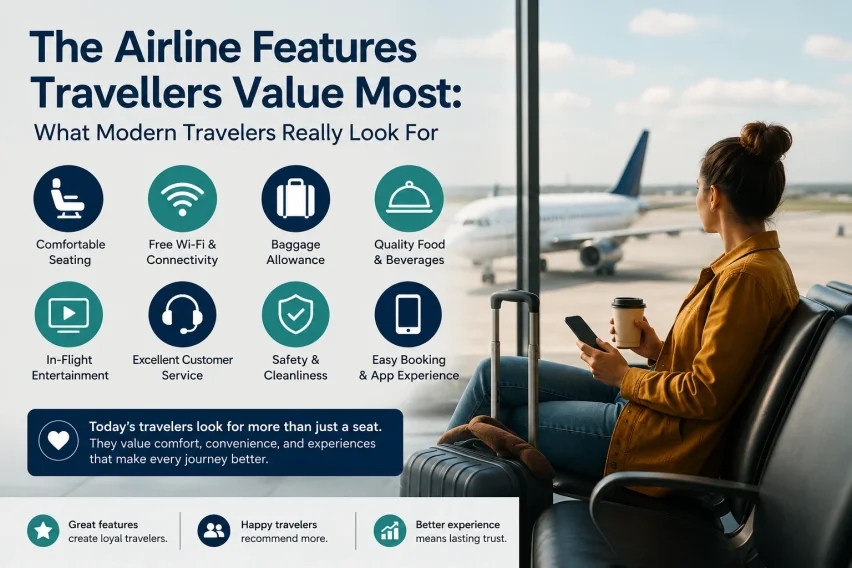
Choosing an airline is no longer just about finding the cheapest ticket. Across the UK and Europe, today's travellers compare far more than prices before booking a flight. Comfort, reliability, customer service, baggage policies, sustainability, and digital convenience have all become major factors that influence booking decisions.
Recent industry research shows that travellers increasingly prioritise the overall airline customer experience over simply securing the lowest fare. According to the International Air Transport Association (IATA), passenger expectations continue to evolve as airlines invest in digital technology, onboard comfort, and more personalised services. At the same time, European travellers are becoming more informed, reading reviews, comparing airline service quality, and looking for carriers that consistently deliver value.
Whether travelling for business, holidays, or family visits, passengers expect a smooth journey from booking their ticket to collecting their luggage. Even small details, such as an easy-to-use mobile app, generous baggage allowance, or friendly cabin crew, can significantly influence customer satisfaction.
This guide explores the airline features travelers value most, why these features matter more than ever, and how leading UK and European airlines are improving every stage of the passenger journey.
The aviation industry has changed a lot over the past ten years. Nowadays, people who travel have a lot of flight options to choose from. They can compare airlines in just a few minutes.
Price is still important, but it is not the only thing that people think about when they are booking a flight.
People who travel today want to feel confident that their trip will be comfortable, easy, and not too stressful. If a flight is delayed, the baggage policy is confusing, the seats are not comfortable, or the customer support is bad, then it can be worse than the money they saved on the ticket.
This shift has encouraged airlines throughout Europe to compete on overall service rather than price alone. Many now invest heavily in improving every aspect of the airline passenger experience, from digital booking platforms to onboard entertainment.
Several factors have accelerated this change:
As a result, today's travellers often compare airlines based on quality rather than simply choosing the cheapest option available.
Comfort consistently ranks among the airline features travelers value most.
Whether flying for one hour or twelve, passengers appreciate seats that provide sufficient legroom, adjustable headrests, ergonomic support, and a relaxing cabin environment. Business travellers often prioritise productivity, while families look for space and convenience. Leisure travellers simply want to begin their holiday comfortably.
Many European airlines now invest in:
Small improvements create a noticeably better airline customer experience, particularly on medium and long-haul flights.
Arriving on time is very important. The airline is what matters in this case, so the airline needs to be reliable. Things like business meetings and family events are affected by this. You also need to catch your flights and check into your hotel on time. So when an airline is on time, it really matters to people. This makes airline punctuality one of the strongest influences on customer satisfaction. People like airlines that get them where they need to go without delays. They prefer these airlines over ones that are always late.
Airlines are trying to get better at this by doing a few things. They are:
Reliable operations are really important. They help to reduce the stress that people feel when they are traveling. This means that passengers will feel more confident during the trip. Reliable operations make a difference because they increase passenger confidence throughout the entire journey. This is what matters most to passengers.
Technology continues to improve air travel, but people still remember exceptional service. When we think about flying, we know that technology is getting better and better. What really sticks with us is when we get great service from the people we meet. The people who work on the planes, the customer support teams, and the staff at the airport contribute to excellent airline service quality to make sure we have a good experience with the airline.
Travellers value airlines that:
Positive interactions often become the reason passengers choose the same airline again. Excellent customer service also strengthens long-term brand loyalty, helping airlines stand out in an increasingly competitive market.
Unexpected baggage fees remain one of the biggest frustrations for travellers. People really hate it when they have to pay extra for their bags. This is a problem for travellers. Airlines should be clear about what they will charge for bags. A clear airline baggage policy allows passengers to understand exactly what is included before booking. People want to know what they are getting before they book their ticket.
So, travellers like it when airlines explain things clearly such as:
When airlines are clear about the cost, people trust them more. They are also less likely to be surprised and upset at the airport. Some airlines are really good about this. They let people choose what they want.
They offer baggage options so people can pick what works best for their trip. This means people can make their booking fit their travel needs. Airlines that do this are really helping travellers, and people like that about them. Travellers have a better experience when airlines are clear about baggage fees. Many airlines also offer flexible baggage options, allowing passengers to customise their booking according to their travel needs.
The booking process often creates the first impression of an airline. A fast, intuitive website or mobile app significantly improves the overall airline booking experience. Today's passengers want simple things from an airline. They want to be able to:
A complicated booking journey may cause customers to abandon their purchase and book with another airline instead. Being able to do things on your phone or computer is really important for airlines in Europe to stay competitive with other airlines. This is because digital convenience is one of the things that sets one airline apart from another airline in Europe.
Passengers want more than getting to their destination. They want to stay entertained and connected during the flight.
Modern inflight entertainment has evolved far beyond overhead television screens.
Many airlines now provide:
For business travelers, internet access is crucial to get work done while flying, while families appreciate entertainment options that keep children occupied.
On short flights, passengers enjoy wireless entertainment on their own devices. Inflight entertainment and connectivity make flights more enjoyable. Passengers expect airlines to provide these services.
Regular travellers want their loyalty recognised. This is why airline loyalty programmes remain among the most valued airline features.
Modern loyalty schemes give customers rewards like:
These benefits encourage passengers to continue booking with the same airline, which helps build a stronger relationship over time.
For business travellers loyalty programmes are just as important as the ticket price when choosing an airline. They like to stick with airlines that recognise their loyalty.
Environmental responsibility has become increasingly important across Europe. Many travellers now actively compare an airline's sustainability initiatives before booking.
According to the European Environment Agency, aviation contributes around 4% of the European Union's transport greenhouse gas emissions, encouraging airlines to invest in cleaner technologies and more efficient operations.
Many leading airlines are now focusing on the following:
Passengers increasingly appreciate airlines that demonstrate genuine environmental responsibility rather than simply making marketing claims. Sustainability has become an important component of overall airline customer experience, particularly among younger travellers.
Many travellers no longer ask, "Which airline is the cheapest?" Instead, they ask, "Which airline offers the best value?"
True value combines several factors:
Paying slightly more often feels worthwhile when the overall experience is significantly better. Airlines delivering consistent value typically enjoy higher customer satisfaction and stronger repeat bookings.
Every airline competes for attention during the booking process.
When travellers compare several similar ticket prices, the deciding factor often becomes the overall experience rather than cost alone.
Research consistently shows that passengers who trust an airline are more likely to:
Each positive interaction builds confidence, while each negative experience increases the likelihood of choosing another airline next time. As competition across European aviation continues to grow, delivering an outstanding airline passenger experience has become one of the industry's strongest competitive advantages.
Across Europe, several airlines have built strong reputations by focusing on the features travellers value most. While every airline has its own strengths, the best carriers understand that customer satisfaction comes from delivering a reliable experience before, during, and after every flight.
As one of Europe's best-known airlines, British Airways continues to invest in improving the overall passenger experience. Its extensive route network, multiple cabin options, and well-established Executive Club loyalty programme appeal to both business and leisure travellers.
Passengers particularly value its comfortable long-haul cabins, airport lounge access for eligible customers, and digital tools that make managing bookings straightforward. British Airways has also been modernising its fleet to improve fuel efficiency while enhancing onboard comfort. For travellers looking for a balance between premium service and global connectivity, British Airways remains one of the leading choices in Europe.
Lufthansa has earned a reputation for reliability, punctuality, and professional service. Business travellers often choose the airline because of its consistent schedules and strong network across Europe and beyond. The airline has invested heavily in fleet renewal, fuel-efficient aircraft, and digital technology to improve every stage of the journey.
Passengers also appreciate Lufthansa's well-organised boarding process, comfortable cabins, and comprehensive Miles & More loyalty programme, which rewards frequent flyers with upgrades and travel benefits.
Air France combines modern travel with French hospitality, creating an experience that many passengers associate with comfort and quality. Its cabins are designed with passenger comfort in mind, while its onboard dining and entertainment options continue to receive positive reviews.
The airline has also expanded its sustainability initiatives by investing in newer aircraft, reducing single-use plastics, and increasing the use of sustainable aviation fuel where possible.
KLM has long been recognised for dependable service and customer care. Its digital services are particularly impressive, allowing passengers to check in, receive boarding passes, and access travel updates with ease.
Travellers also appreciate the airline's efficient transfer process through Amsterdam Schiphol Airport, making KLM a popular option for connecting flights across Europe. The airline continues investing in cleaner aviation technology and more sustainable operations, reflecting the growing importance of environmental responsibility among European travellers.
Finnair has built its reputation around efficiency, comfort, and punctuality. Its Nordic-inspired cabin design creates a calm travelling environment, while its focus on customer service consistently receives positive feedback.
The airline is also recognised for introducing modern aircraft that reduce fuel consumption and improve passenger comfort, particularly on longer routes.
Scandinavian Airlines places strong emphasis on simplicity and convenience. Passengers often highlight its straightforward booking process, reliable schedules, and efficient customer service. SAS has also made sustainability one of its core priorities by investing in newer aircraft and supporting initiatives aimed at reducing aviation emissions. For environmentally conscious travellers, these efforts can play an important role when choosing an airline.
Virgin Atlantic has built a loyal customer base by combining excellent service with an enjoyable onboard experience. From comfortable seating and quality inflight entertainment to attentive cabin crews, the airline focuses on making long journeys more relaxing.
Its Flying Club loyalty programme also offers valuable rewards for frequent travellers, while continued investment in newer aircraft supports improved fuel efficiency and passenger comfort.
easyJet demonstrates that low-cost travel does not have to mean sacrificing convenience. Its simple online booking system, extensive European network, and flexible travel options make it one of the continent's most popular airlines. The airline continues investing in digital technology that allows passengers to manage bookings, check in, and receive real-time travel updates through its mobile app.
Ryanair has become one of Europe's largest airlines by focusing on affordable travel.
While low fares remain its biggest attraction, the airline has also introduced several improvements to enhance the overall customer experience, including a redesigned website, an easier booking process, and expanded digital services. Passengers who understand the airline's baggage policies and optional extras often find it offers excellent value for short-haul travel.
Jet2 consistently ranks highly for customer satisfaction across the UK.
Its friendly customer service, transparent pricing, and generous baggage policies have helped build strong passenger loyalty. The airline also receives praise for reliable holiday packages that combine flights, accommodation, and transfers into one convenient booking.
For many families travelling across Europe, Jet2 remains one of the most trusted choices.
Every traveller has different priorities, which means there is no single airline that suits everyone. Before booking your next flight, take a few minutes to think about what matters most to you.
If you regularly travel for business, punctuality, flexible ticket options, and airport lounge access may be your top priorities. Families often look for generous baggage allowances, easy boarding procedures, and helpful customer support.
Holidaymakers may place greater importance on affordable fares, comfortable seating, and reliable flight schedules. Reading independent reviews can also provide valuable insight into an airline's real-world performance. Instead of focusing only on marketing claims, compare recent passenger experiences, customer satisfaction ratings, and service consistency.
A slightly higher fare may represent better overall value if it includes additional baggage, better seating, or fewer unexpected charges. Ultimately, choosing an airline based on your travel needs rather than simply the lowest ticket price often leads to a much better journey.
The airline industry continues to evolve at an impressive pace.
Technology, sustainability, and passenger expectations are shaping the next generation of air travel across Europe. Artificial intelligence is helping airlines provide more personalised travel recommendations and quicker customer support. Biometric technology is making airport check-in and boarding faster than ever before.
Mobile apps are becoming smarter, giving passengers real-time flight updates, baggage tracking, digital boarding passes, and travel notifications in one place. Sustainability will also continue to influence future airline decisions.
Many European airlines are investing in more fuel-efficient aircraft, sustainable aviation fuel, lighter cabin materials, and smarter flight planning systems to reduce emissions. At the same time, passengers are becoming more selective about the companies they support. Transparency, environmental responsibility, and consistently excellent customer service are likely to become even more important over the coming years.
The airlines that successfully combine innovation with exceptional passenger care will be the ones that earn long-term customer loyalty.
The airline features travellers value most have changed considerably over the past decade. While competitive pricing remains important, today's passengers expect much more than an affordable ticket. Comfortable seating, reliable schedules, transparent baggage policies, responsive customer service, intuitive digital tools, and meaningful sustainability initiatives all contribute to a positive travel experience.
Leading UK and European airlines continue to invest in these areas because they understand that customer satisfaction doesn't begin at take-off or end at landing. It starts the moment someone books a flight and continues long after they arrive at their destination. Whether you're planning a weekend city break, a family holiday, or an international business trip, taking time to compare airline features rather than focusing solely on ticket prices can make a significant difference to your overall journey.
As competition continues to grow across Europe's aviation industry, travellers can expect even better service, smarter technology, and more customer-focused innovations in the years ahead.