



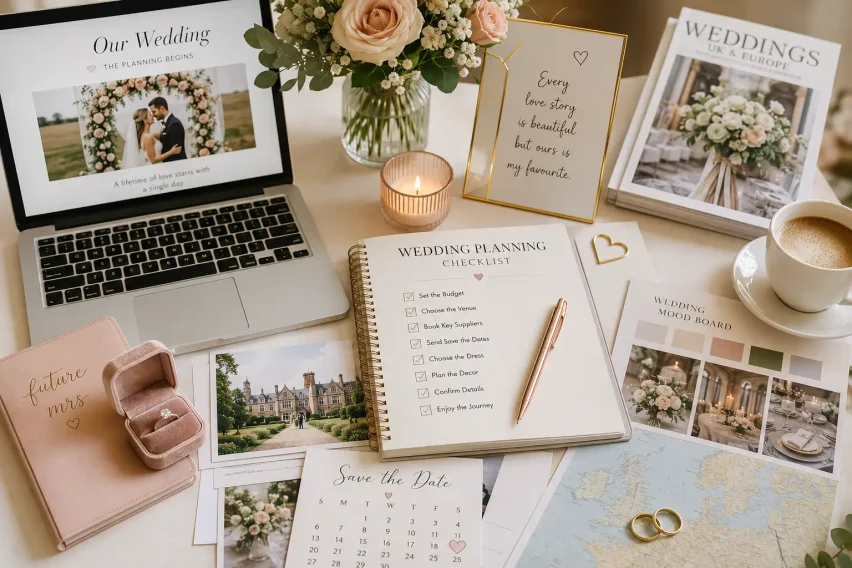
Getting engaged is one of life's most exciting milestones. Along with the celebrations, congratulations, and sharing the news with family and friends comes the exciting task of planning your wedding. While it may seem overwhelming at first, having the right approach can make the experience enjoyable rather than stressful.
Every couple has a unique vision for their wedding day. Some dream of an intimate countryside ceremony, while others imagine a grand celebration in a historic venue. Regardless of the style or budget, the key to success is having a clear plan from the beginning. Following the best wedding planning tips for newly engaged couples helps you stay organised, avoid common mistakes, and enjoy every stage of the journey.
The UK wedding industry continues to thrive, supporting thousands of venues, photographers, florists, caterers, and designers every year. According to industry reports, the average engagement lasts around 20 months, giving couples plenty of time to organise every detail without feeling rushed. At the same time, sustainability is becoming increasingly important, with many European couples choosing locally sourced flowers, eco-friendly decorations, and digital invitations to reduce waste.
Whether you're planning a traditional ceremony, a destination wedding in Europe, or a modern celebration, this wedding planning guide will walk you through every important step while introducing trusted UK and European brands that can help bring your vision to life.
One of the biggest misconceptions is that wedding planning begins once you've booked a venue. In reality, the process starts as soon as you become engaged. The first few weeks are the perfect opportunity to discuss your expectations as a couple. Before contacting venues or browsing wedding dresses, sit down together and talk about your priorities.
Ask yourselves: What type of wedding do we want? How many guests would we like to invite? Do we prefer a city, countryside, or destination wedding? Which season would suit us best? What experiences matter most to us?
Having these conversations early creates a strong foundation for the rest of your wedding planning checklist. It also helps prevent disagreements later when larger decisions need to be made. Remember that your wedding should reflect your personalities rather than current trends. Staying true to your vision makes planning much easier.
One of the most important wedding planning tips is establishing a realistic budget before making any bookings. Without a clear financial plan, it's easy for costs to increase unexpectedly. Begin by deciding your overall spending limit. If family members are contributing financially, discuss expectations openly so everyone understands what is included.
Your wedding budget planning should cover:
Many wedding experts recommend setting aside around 10% of your budget for unexpected expenses. Small costs often arise during the final weeks, so having extra flexibility reduces unnecessary stress. Keeping track of spending in a spreadsheet or wedding planning app makes it easier to stay within budget throughout the planning process.
A detailed wedding planning checklist helps transform a large project into smaller, manageable tasks. Instead of trying to organise everything at once, break the process into monthly milestones. A typical checklist may include:
Working through one task at a time makes stress-free wedding planning much more achievable.
Choosing your venue is often the biggest decision you'll make during how to plan a wedding. Your venue influences the atmosphere, guest capacity, décor, catering options, and even your wedding date. Before visiting venues, consider:
There's little point falling in love with a venue that comfortably holds 80 guests if your guest list includes 150 people. Having a realistic estimate helps narrow your options quickly.
Think about how easily guests can travel. Many UK and European couples choose venues close to transport links or provide nearby accommodation for family travelling longer distances.
Weather can be unpredictable. Choosing venues with flexible indoor and outdoor ceremony spaces provides reassurance if conditions change unexpectedly.
Some venues include catering, event coordination, furniture, decorations, accommodation, and ceremony spaces. Others offer only the venue itself. Understanding what's included helps with wedding budget planning.
Photos online rarely tell the full story. Visiting several venues allows you to compare lighting, accessibility, parking, overall atmosphere, and staff professionalism to see what the venue is actually like. Often, couples know immediately when they've found the right place.
The UK and Europe offer an incredible variety of wedding venues, from elegant country estates to luxury city hotels and breathtaking castles. Some respected venue providers include:
Known for elegant country houses and historic estates perfect for both intimate ceremonies and larger celebrations.
Offers beautiful wedding venues surrounded by countryside, gardens, and luxury accommodation.
Provides historic castles, monasteries, and palaces transformed into unique wedding venues across Spain.
A collection of luxury boutique hotels throughout Europe, ideal for couples planning unforgettable destination weddings.
Choosing a venue isn't simply about appearance. Excellent customer service, experienced wedding coordinators, and flexible event packages often make a significant difference to your overall planning experience.
It's easy to become influenced by social media, Pinterest boards, or the opinions of family and friends. However, the happiest couples are usually those who plan a wedding that reflects their own personalities rather than trying to impress others. Whether you choose a small countryside ceremony with 30 guests or a grand celebration with hundreds of friends and family, the most memorable weddings are those filled with genuine happiness and meaningful moments. The goal isn't creating a perfect Instagram post. It's creating memories you'll treasure for the rest of your lives.
One of the most important wedding planning tips for newly engaged couples is to choose reliable suppliers early. Popular venues, photographers, florists, and caterers are often booked 12–18 months in advance, especially during peak wedding season. Rather than choosing solely on price, compare suppliers based on:
Meeting suppliers before booking also helps ensure your personalities and expectations align. A trustworthy supplier doesn't simply provide a service; they become an important part of making your wedding day run smoothly. If possible, create a shortlist of preferred vendors before making any commitments. This keeps your planning organised and helps avoid last-minute decisions.
For many couples, shopping for the wedding dress is one of the most memorable parts of the planning journey. Instead of rushing into appointments, allow yourself plenty of time to explore different styles, designers, and bridal boutiques.
Most bridal experts recommend purchasing a wedding dress 8–12 months before the wedding, allowing sufficient time for fittings and alterations. When visiting bridal boutiques:
Across Europe, several bridal designers have earned outstanding reputations for craftsmanship and timeless design. Some of the leading bridal brands include:
Elegant bridal gowns with contemporary European styling.
Luxurious fabrics and sophisticated bridal collections.
Handmade gowns known for minimalist elegance.
Modern bridal fashion with a strong focus on sustainable craftsmanship.
Choosing an experienced bridal boutique also ensures professional fittings and expert styling advice, helping brides find a dress that feels just as comfortable as it looks beautiful.
Once your venue and date are confirmed, invitations become the next major milestone. Creating the guest list early helps determine venue capacity, catering costs, seating arrangements, wedding stationery requirements, and overall wedding budget. Many couples now combine traditional printed invitations with digital RSVP systems, making it easier to track responses and communicate updates. Trusted UK and European stationery brands include:
Premium personalised wedding invitations and stationery.
Elegant European invitation designs with matching wedding collections.
Custom invitations, menus, place cards, and thank-you notes.
Maintaining a digital guest spreadsheet alongside printed invitations helps keep the entire planning process organised.
Wedding decor continues to evolve as couples look for celebrations that feel elegant, personal, and memorable. Some of the biggest wedding decor trends across the UK and Europe include:
Seasonal flowers sourced from local growers continue gaining popularity while reducing environmental impact.
Soft whites, sage green, champagne, beige, and earthy tones remain among the most popular wedding colour combinations.
Fairy lights, candles, chandeliers, and warm ambient lighting help create romantic settings for both indoor and outdoor receptions.
Simple centrepieces, quality tableware, and natural textures continue replacing overly elaborate decorations.
Custom welcome signs, illustrated seating charts, monogrammed stationery, and personalised favours help create memorable guest experiences. Rather than following every trend, couples should focus on décor that reflects their own personalities and complements the chosen venue.
Choosing trusted brands gives couples greater confidence throughout the planning process. Many established UK and European companies have built strong reputations through quality craftsmanship, excellent customer service, and years of experience.
These designers are recognised for elegant collections that combine timeless style with exceptional craftsmanship.
Finding the perfect engagement ring or wedding band is another important milestone. Leading European jewellery brands include:
These brands are known for quality materials, expert craftsmanship, and beautiful collections suitable for every budget.
Trusted names include:
Their personalised invitations, menus, seating plans, and thank-you cards help couples create a consistent wedding theme.
Many couples also create gift registries featuring respected European home brands such as:
These brands offer practical, high-quality gifts that couples can enjoy long after their wedding day.
Even with the best intentions, it's easy for couples to make decisions that add unnecessary stress or increase costs. Being aware of common mistakes can help you stay organised and enjoy the planning process. Some of the most common wedding planning mistakes include:
Remember that no wedding is completely perfect. The goal is to create a meaningful celebration that reflects your relationship rather than trying to achieve perfection.
The first step is to enjoy the moment before moving on to planning. Once you're ready, discuss your budget, create an initial guest list, decide on your preferred wedding style, and begin researching venues and trusted wedding suppliers.
Set a realistic budget from the beginning and decide which aspects of the wedding matter most. Keep track of every expense, compare supplier quotations, and leave a contingency fund for unexpected costs.
Many couples choose trusted brands such as Pronovias, Rosa Clará, Catherine Deane, Papier, Pandora, Monica Vinader, Boodles, Le Creuset, and The White Company because of their quality, craftsmanship, and strong reputation.
Planning a wedding is one of life's most exciting experiences, but it also comes with countless decisions. From setting a realistic budget and choosing the perfect venue to selecting trusted suppliers and creating a memorable guest experience, every step contributes to a celebration that reflects your story as a couple.
The best wedding planning tips for newly engaged couples are often the simplest: start early, stay organised, communicate openly, and focus on what truly matters to both of you. Taking a structured approach not only reduces stress but also gives you more time to enjoy the journey leading up to your wedding day.
Choosing reputable UK and European wedding brands can also make the planning process much easier. Whether you're searching for a beautiful bridal gown, timeless wedding jewellery, personalised invitations, elegant décor, or thoughtful wedding gifts, established brands are known for their quality, craftsmanship, and dependable customer service. Investing in trusted suppliers often results in a smoother planning experience and greater peace of mind.
Most importantly, remember that your wedding is a celebration of your relationship—not a competition to create the most extravagant event. Personal touches, meaningful moments, and spending time with the people you love will always leave the strongest memories. With careful planning, trusted suppliers, and thoughtful decisions, you'll not only create a beautiful wedding day but also enjoy every milestone along the way. After all, the journey to "I do" should be just as memorable as the celebration itself.