


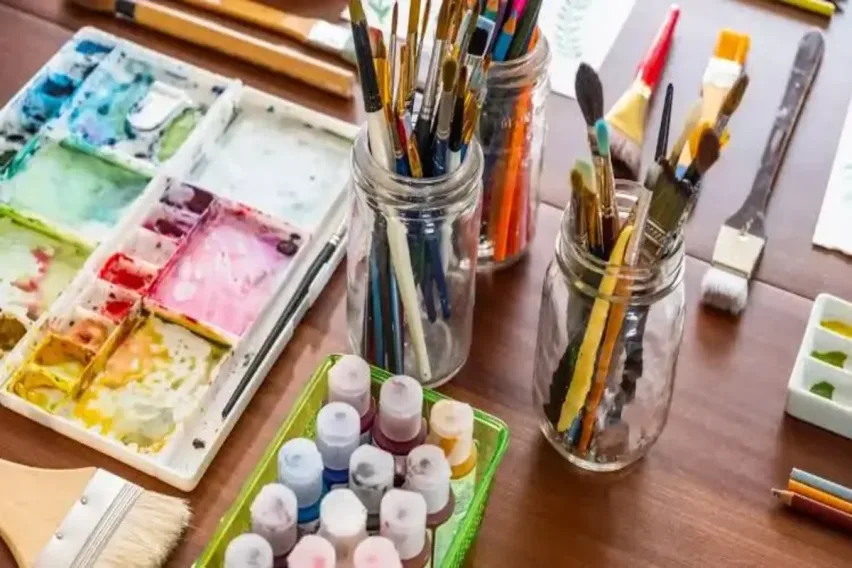

Starting out in art can seem overwhelming with so many different art supplies available. However, you don’t need to buy everything at once and won’t need any professional art supplies.
You just need a few art supplies to get started with drawing and experimenting with color and different painting styles. Just make sure to pick supplies that are suitable for the art you enjoy doing, easy to use, and affordable.
This shopping guide is a basic overview of the art supplies you can use when starting out. It will give you some information about what they are used for and some tips to consider when purchasing. This will help you to make more informed choices, whether you want to learn to sketch, paint with acrylics, or experiment with watercolours.
You won’t need many art supplies to start creating. A basic art set with drawing and a few painting supplies will cover everything you need.
Your basic art set may include:
Graphite pencils
Sketchbook
Erasers and pencil sharpener
Coloured pencils
Acrylic or watercolour paints
Paint brushes
You will want to ensure that the art supplies you choose are suitable for the style of art you would like to create. If you love to draw with pencils, you will need different supplies to if you want to try watercolor.
Graphite pencils are a great tool to start with. They can be used for sketching, shading, drawing outlines, practicing proportions, and more.
They come in different grades. The harder pencils will create lighter marks, whereas the softer pencils will create darker lines and are better for shading.
A basic art set may consist of:
Pencil Grade Use
2H Light outlines and sketching
HB General drawing
2B Shading
4B Darker shading
You don’t need to invest in a full set of pencils, having a few different grades will be enough to practice your drawing techniques.
Sketchbooks are a great place to start drawing, taking notes and seeing how your skills develop. By regularly drawing with your art supplies you will get to know how to use them and get more confident.
Smooth paper will work well with graphite and pencils. Textured paper can give a nice feel to your drawings. If you plan on using watercolor or other wet media, then ensure your paper is suitable for this. A drawing sketchbook may not be suitable for using with paint or water.
Although these may seem like a small detail they are essential for everyday drawing.
There are different types of erasers:
Kneaded erasers can be used to lightly erase graphite from your paper. Great for lightening areas.
Vinyl erasers—great for erasing pencil.
Pencil sharpener—keeps your pencils sharp.
The Staedtler Mars Plastic Eraser is a well-known brand. Consider how they work with your paper. Will they cause any marking? Will they cause any damage to your paper?
Coloured pencils are a great way to experiment with colour without needing to learn how to mix paint. They’re easy to take with you, no set up required and can be used for basic colouring, illustrations or more detailed pieces.
Consider the amount of colours in the pack, hardness/softness of the core, amount of pigment and how well they blend.
Soft cores will blend easily and build up layers but may need sharpening more frequently. The Derwent Coloursoft range are a great choice for soft core pencils.
Start with a basic set and add more colours as you learn to shade and blend.
Acrylic paints are water based and dry quickly. They can be used on a variety of surfaces such as canvases, canvas boards, wood and paper. They are very versatile, easy to clean and can be layered quickly. They are great for beginners as there is no need for any materials and they dry quickly.
Watercolour paints are also popular. They use water to create transparent colours. They are great for washes and delicate effects but do require more care. Your paper must be thick enough to hold the water and you will need to work with the flow of the paint. It can be harder to fix any mistakes.
Both paints will have a different feel and technique. Have a go with both to see which one works best for your style
This shopping guide has been researched using information from manufacturers & product specifications.
Consider:
What it is for
What material it is made from
Complementary with different papers & surfaces
Product specifications
Availability across the UK & Europe
We have separated drawing & painting supplies due to the different requirements for each. This will help you understand what each supply is for & what would be best for your creative interests.
We have not hands on tested all the products listed below. Product specifications, pricing & availability will vary between retailers & countries. Always check the latest product information before purchasing.
Below are examples of different drawing & painting supplies. This will help you understand what is available for beginners.
A set of graphite pencils is a great place to start when learning to draw. This set comes in a variety of grades, meaning you can experiment with light sketching, outlining & shading.
This set comes in a variety of grades, so you can find a set that suits your needs.
Key features:
Variety of grades
Pencil
Sketching & shading
Different sizes
Best for: Beginners wanting to practice sketching, portraits, shading & general illustration.
Consider: Ensure you check what grades are included. A small range of commonly used grades may be a good option for beginners.
If you're looking to get started with coloured illustration, coloured pencils are a great option. These pencils have a soft core to make colouring, layering & blending easy.
These pencils can be used for colouring, nature illustrations, creative sketching & more.
Key features:
Soft core
Variety of colours
Layering & blending
Different sizes
Best for: Beginners wanting to try coloured pencil illustration, colouring & creative drawing.
Consider: A softer core may mean you have to sharpen more frequently. Check how many colours are in the set & if a smaller range of commonly used colours would be a good option for you.
A sketchbook is a great tool to help you practice different drawing techniques, store your ideas & keep your creative work together. This range has a variety of sketchbooks for drawing & dry media.
The spiral binding can make turning the pages easier depending on the model you choose.
Key features:
Texture & weight of paper
Number of pages
Binding
Sizes available
Dry media friendly
Best for: General sketching, pencil drawing, art classes & creative practice.
Consider: Check the paper specifications. If it is for dry media then it may not be suitable for heavy watercolour use. Larger sizes may not be as easy to carry around.
An eraser & sharpener will be a great addition to your beginner drawing kit. This eraser has been designed to erase graphite marks. A suitable sharpener will help keep your pencils in working condition.
These can be a great addition to your general sketching & drawing.
Key features:
Material
Size & shape
Compatible with drawing pencils
Design
Portable
Best for: Students, beginner artists & those practicing graphite drawing.
Consider: Ensure the eraser is compatible with your paper & drawing materials. A basic set may be enough for practicing at home.
Acrylic paints are a popular option for beginners wanting to try out opaque painting. This range has a variety of colours to use within your creative projects.
You can use these paints on suitable surfaces such as canvases & compatible paper. They can also be mixed to create extra colors.
Key features:
Variety of colours
Consistency
Pigment info
Compatible with painting surfaces
Sizes available
Best for: Beginners wanting to try out painting on canvases, colour mixing & general acrylic artwork.
Consider: Acrylics dry quite quickly making it harder to blend for longer periods. Have water & cleaning materials to hand. Clean your brushes after use.
Watercolor painting uses transparent layers of pigment & water to create soft colours. It is commonly used for landscapes, botanical illustrations, travel journals & more.
This range has a variety of watercolor sets.
Key features:
Variety of colours
Format
Mixable
Portable
Compatible with watercolour paper
Best for: Beginners wanting to try landscapes, nature illustrations & watercolour.
Consider: Watercolour can depend on the paper you use. Generally it is best to use watercolour paper. The colours may also look different when wet.
Brushes will help you control the application of your paint. Different shaped & sized brushes can be used for broad strokes, fine details, washes & more.
This range has a variety of synthetic brushes.
Key features:
Shape & size
Synthetic or natural bristles
Brush handle
For what medium
Cleaning
Best for: Beginners wanting to try different painting techniques & learn how to use different brush shapes.
Consider: Ensure the brushes are suitable for the medium you are using (Acrylic, Watercolour etc). They may not be suitable for all painting techniques.
Fineliners & illustration pens can be a great addition if you are interested in line art, hand lettering & detailed illustrations.
This range has a variety of nibs & sizes. They use pigment based inks & there are options to suit your drawing & illustration needs.
Key features:
Nib size & shape
Ink type
Water resistant
Lightfastness
Compatible with different papers
Best for: Illustration, line art, hand lettering & detailed artwork.
Consider: Check the specifications of the exact pen. Paper is an important consideration as some surfaces may cause the ink to bleed. A small range of nib sizes would be a good place to start.
Many beginners will wonder whether they should buy individual art supplies or an art starter kit. There are benefits to both options & it will depend on what type of artwork you want to try.
Benefits of an Art Starter Kit
An art starter kit can include pencils, coloured pencils, paints, brushes, erasers & more.
If you are unsure what creative medium you would like to try then this can be a great way to try different materials.
Ensure you check what is included in the kit. Some kits will be focused on drawing whilst others will have a variety of materials. Just because there are lots of items in the set doesn't mean they will all be useful.
If you know what art technique you want to try then individual supplies may be a better option.
For example:
If you are learning to draw with graphite then you may only need pencils, a sketchbook & eraser.
If you are a beginner wanting to try watercolour then you may want to choose your own watercolour paints, suitable paper & a few brushes.
If you are trying acrylic painting then you may need acrylic colours, brushes & a suitable painting surface.
This can help you avoid paying for supplies you won't be using.
How Much Should Beginners Spend On Art Supplies?
You don't need to spend a professional amount to get started with your art hobby. A small range of suitable supplies will give you lots of opportunities to practice & learn.
Consider:
What medium you want to try
How regularly you will be practicing
Whether you need portable supplies
How many items are included
Whether they are suitable for your technique
Often it is best to start with a few useful items & build up your collection with specialised items. This will also help you understand what you enjoy using.
Below is a summary of the products mentioned & what they are best for.
Product
Best for
Consider
Faber-Castell 9000 Graphite Pencil Set
Sketching & shading
What grades are included
Derwent Coloursoft Pencils
Colouring & illustration
Soft core & blending
Canson XL Sketchbook
Practice drawing
Weight & texture of paper
Staedtler Mars Plastic Eraser
Erase graphite marks
Type of eraser & compatibility with paper
Winsor & Newton Galeria Acrylic Colour Set
Acrylic painting
Variety of colours & drying time
Daler-Rowney Aquafine Watercolour Set
Watercolour painting
Compatibility with paper & variety of colours
Winsor & Newton Cotman Brush Set
Painting techniques
Variety of brush shapes & sizes
Faber-Castell Pitt Artist Pens
Illustration & line art
Nib sizes & ink properties
The best option for you will depend on your interests, what techniques you want to learn & what you already have.
Checklist For Buying Beginner Art Supplies
Consider the following when purchasing your first art supplies:
Start with a few essentials
Choose graphite pencils with suitable grades for sketching & shading.
Choose a sketchbook with suitable paper for your preferred medium.
Consider a suitable eraser & sharpener for your pencils.
Choose coloured pencils if you want to try coloured drawing.
Choose acrylic or watercolour paints depending on your preferred painting style.Choose brushes that will be suitable for your type of paint.
Check what is included in art starter kits.
Compare product information between retailers.
Read reviews & check return policies.
Common Mistakes To Avoid
Understanding a few common mistakes will make choosing your art supplies easier.
Big art kits can look very appealing but you may not use many of the items as a beginner.
Starting with the essentials for drawing/painting will help you understand what you prefer.
Not all art supplies will work with all techniques. For example, standard sketchbook paper may not be suitable for heavy watercolour use. Some brushes are designed for certain types of paint.
Check what the product is for from the manufacturers information.
The type of paper can affect how your drawing & painting supplies work. Graphite, coloured pencils, inks & watercolour can all require different paper qualities.
Choosing a suitable surface can help avoid issues such as too much bleeding, texture & warping.
It can be tempting to go for high quality items but often beginners will benefit from practicing basic techniques & understanding what they prefer. Start with suitable essentials & upgrade individual items as your skills & interests develop.
Learning to draw or paint takes practice. Your early sketches & paintings may not look exactly how you expect them to. Experimentation is part of the process.
Use your sketchbook to practice different techniques, experiment with different supplies & track your progress.
Choosing art supplies as a beginner is about understanding what you need. A sketchbook, a few graphite pencils & basic supplies will give you a good base to start practicing your drawing. If you want to try painting then you can build up your collection with suitable brushes, acrylics or watercolours.
The Shoptique Editorial Team creates guides that help readers understand shopping, consumer technology and product specifications. These guides explain terms show how devices work and give clear information in plain language. We research carefully use sources and check facts before we publish.