


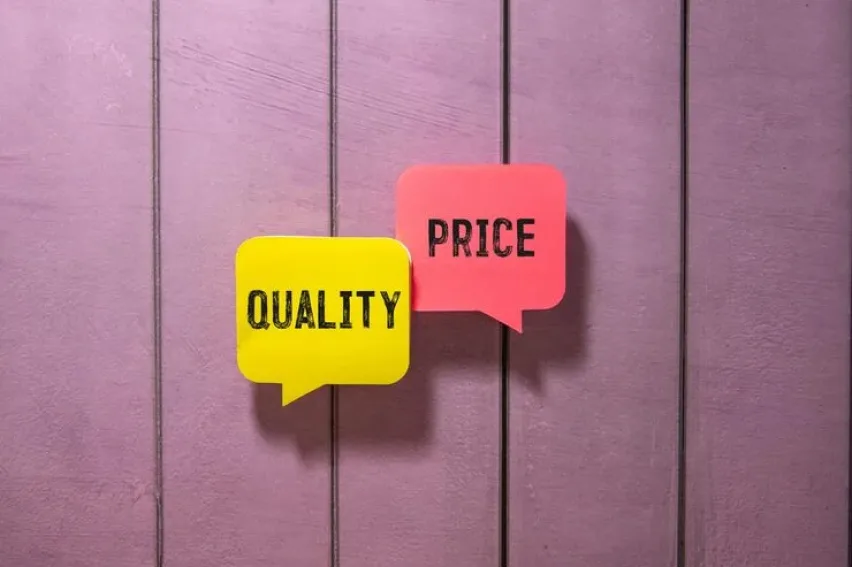

As far as price versus quality issues go, one suggestion is that you do not make a choice based purely on the price factor alone. There are other considerations that need to be made, such as material, durability, functionality, cost of maintenance, warranty, and suitability to your requirements.
Suppose you are browsing two similar bags on the Internet. One was considerably cheaper, while the other appeared better made and offered more storage space. The cheaper option caught my attention first.
This is something that most people experience. You get something that seems to suit you, see the price difference, and wonder whether the extra price is worth it. At times it is. Other times it is not.
The truth is that when it comes to price, you know how much the seller is charging for his product, but you don't know everything there is to know about the product. Smart shopping comes down to having a good understanding of cost and quality.
And that doesn't require being an expert on the products either.
Price is what you pay for the item. Quality is what the product is made of, and whether it works and fulfills its purpose or not.
The value for money connects all the above concepts and considers what you get in exchange for what you pay.
For instance, let’s assume that you are purchasing a backpack to be used in everyday commutes. The less costly option can serve your purposes effectively, while the costlier version will feature better stitching, more comfort in straps, and additional padding.
But which one is a better buy?
This is going to depend on your intended use of the bag. If you only require the bag for occasional trips, then the less expensive option might serve well. However, if you will be carrying a laptop and thick books around every day, a more durable design would serve better.
Product quality vs price is not merely an issue of choosing between inexpensive and expensive.
No. Higher price does not always indicate higher quality or better performance of the product.
There could be many reasons for the expensive nature of the product, ranging from the design to marketing and packaging of the product. All these could matter to you or not.
Look, an expensive product does not mean it has poor quality. In other words, price alone doesn’t necessarily make a case for assessing its fairness.
Well, then, what does one need to compare? One should start with facts about the item that can be proved – its technical data, material composition, care guidelines, warranty conditions, and reviews by those who have already tried the product.
Also, one shouldn’t forget about the functions of the product in question. Sometimes, an easy-to-use item, which has one simple function only, will be more valuable than an overloaded product full of functions one won’t use.
To be exact, price can be considered higher, but only if the additional advantages are of interest to a consumer.
When comparing affordable vs expensive products, look beyond the initial cost. These are the factors to consider before making a decision.
Materials can affect the appearance, comfort, durability, and maintenance of the product. Find out what materials are used in the manufacturing of your product by reading the product description.
How long will the product serve you? If you will use the product daily, it may need to endure more wear and tear than a seldom-used one.
Find out if the company gives some relevant information concerning care, life expectancy, or availability of replacement parts. You may find out some information from customers' comments.
Features do not necessarily equate to better value.
Always ask yourself if the extra features are really solving some problems that need to be solved. If one is buying an appliance for their home, one would find extra functions helpful if they will use them often; otherwise, they will add to cost but not necessarily provide value.
Some items require replacement parts or special maintenance, including cleaning and storage.
This consideration, since it incurs costs, should be checked before purchasing. Also consider whether replacement parts are available and whether repairs appear practical.
A lower purchase price can become less attractive if keeping the item working requires frequent spending.
Know what’s included in the warranty, how long it lasts, and the terms associated with it. The warranty does not promise you will never have issues with the product.
Consider the seller’s return policy and customer service too because they could make a difference if your purchase is damaged on arrival or does not work as you expect.
This is the factor to put first.
Sometimes a good product may not be the best product for you. Think about its intended use, space, and budget when you evaluate options.
My process for evaluating an option is very simple.
1. First, figure out your needs and budget. What does the product have to do and how much are you willing to spend? Differentiate between must-haves and nice-to-haves.
2. Evaluate the specs. Size, material, capacity, compatibility, and other pertinent characteristics should be taken into consideration. Compare apples to apples.
3. Check reliable product information. Review manufacturer guidelines, instructions, and warranty information. When a statement is unclear, seek clarification in related information before using it.
4. Be critical when reviewing customer reviews. Seek recurring statements on durability, effectiveness, and user-friendliness instead of looking for one very positive or negative review. Consider if customers have encountered situations like you.
5. Evaluate the return and warranty policies. Know the terms before you make the purchase. See how the company deals with returns, if there are any exceptions, and what sort of assistance is offered.
6. Evaluate cost of ownership. Consider maintenance needs, spare parts, consumable supplies, repairs, and replacement of your equipment. You won't always be able to predict these costs precisely, but even a rough assessment can help.
Here's an analogy: comparing products is a bit like choosing shoes for a long walk. A cheaper pair might look fine in the shop, but comfort and suitability matter much more once you're several kilometres down the road.
The same principle applies to plenty of purchases. What matters isn't just the amount you pay today, but how well the item serves its purpose afterwards.
Choosing based on cost alone: It could lack some critical feature or need more maintenance.
Taking expensive to be better: Just because a product is expensive, it does not mean that it will last long.
Buying extra features that are not needed: Some extra features could be beneficial for you only if you would use them.
Not considering maintenance issues: Maintenance issues such as cleaning, repairing, and replacement of some components may influence the total cost of the product.
Taking all reviews seriously: Reviews could be quite helpful; however, a few reviews would never represent everyone’s views.
Considering all products equally suitable: A highly rated product may not be suitable for your purpose.
To be honest, the most common mistake is haste. Spending just a few more minutes to consider all the above-mentioned factors may save you from making a bad choice.
When making a purchase, it is advised to take a look at the following checklist:
Does the item satisfy my requirements?
Is the cost reasonable?
Have the materials and specifications been described adequately?
Is there sufficient information to evaluate the expected performance?
Are there any issues mentioned by the customers again and again?
Did I look through the policy regarding warranty and return?
Can servicing of the item prove to be expensive?
Am I buying what I need?
But don't let this become a never-ending research project. Not every single purchase requires hours of comparison. Base your amount of research on the price, the importance, and how long you expect the item to last.
Also, remember that value is subjective. A person who is purchasing something to be used occasionally might very well opt for the cheaper product than a person who uses it every day.
We aren't aiming to buy the most expensive thing or the cheapest thing out there. We're trying to buy what fits us.
Explore Shoptique's smart shopping guides for more practical tips.
While evaluating both price and quality, it would be unwise to base the evaluation on the price label alone. Factors such as manufacturing process, performance, frequency of usage, and maintenance costs should all be considered.
On some occasions, going cheap is actually the wise thing to do. In other cases, spending extra money on features or quality of manufacture may be necessary.
My recommendation would be as follows: compare what you are getting with the money you are paying, and decide which one you like best. Are you going to think about more than just the price tag in the future?
In this article, the author adopts an informative perspective on discussing the issue of the relationship between price, quality, and value for money. The guidance provided in this article is arranged according to the commonly encountered shopping factors such as specifications of the product, materials used in the manufacture of the product, durability, maintenance, customer reviews, warranty, and suitability.
The article does not make any claims that the products have been purchased or evaluated by Shoptique. It simply gives informative guidance on how one can decide.
The Shoptique Editorial Team creates guides that help readers understand shopping, consumer technology and product specifications. These guides explain terms show how devices work and give clear information in plain language. We research carefully use sources and check facts before we publish.